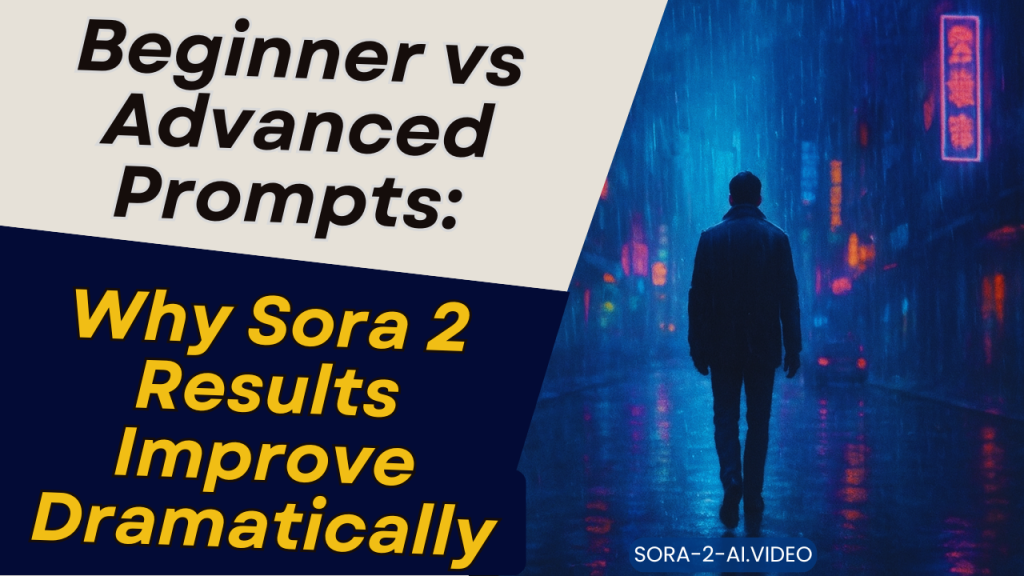
Artificial intelligence has entered a new era where the quality of output depends less on raw computing power and more on how humans communicate with machines. Among the most striking examples of this shift is Sora 2, OpenAI’s advanced text-to-video model. While many users are impressed by Sora 2’s capabilities, a clear pattern has emerged: the difference between beginner prompts and advanced prompts can completely transform the final result.
At first glance, this might seem surprising. After all, if Sora 2 is highly intelligent, shouldn’t it automatically know what we want? The reality is more nuanced. Sora 2 is powerful, but its performance is deeply tied to the quality, structure, and intent of the prompt it receives. This is why advanced users consistently produce cinematic, coherent, and emotionally compelling outputs, while beginners often get generic or underwhelming results.
This article explores why that gap exists, what separates beginner prompts from advanced ones, and why mastering prompt design dramatically improves Sora 2’s output.
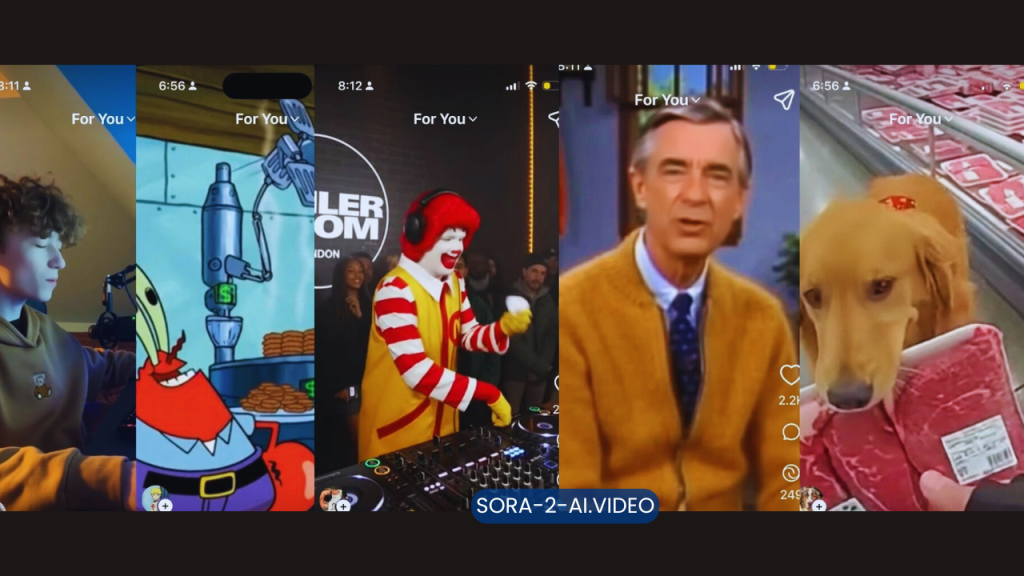
Understanding How Sora 2 Interprets Prompts
To understand the difference in results, it’s essential to understand how Sora 2 “thinks.” Sora 2 does not imagine ideas the way humans do. Prompts act as constraints and signals, guiding those predictions.
A vague or minimal prompt gives Sora 2 a wide range of possibilities. While this freedom sounds beneficial, it often results in average, safe, or generic content. In contrast, a detailed and intentional prompt narrows the prediction space, allowing the model to generate more focused, realistic, and visually consistent scenes.
In simple terms:
- Beginner prompts leave too many decisions to the model
- Advanced prompts make those decisions intentionally
This shift alone explains much of the dramatic improvement in results.
What Beginner Prompts Typically Look Like
Beginner prompts are not “wrong.” They are simply underspecified. Most beginners focus only on the main idea and assume the AI will handle everything else.
For example:
“”Woman in a city walking in the rain”
This prompt gives Sora 2 almost no guidance beyond the subject and setting. As a result, the output might include: Generic lighting
- Unclear time of day
- Inconsistent camera movement
- Emotionally neutral atmosphere
- The result is technically correct but creatively flat.
Beginner prompts often share common traits:
- Short length
- Lack of context or story
- No visual or cinematic language
- No emotional direction
- No technical constraints
Because Sora 2 must guess the missing details, it defaults to the most statistically common interpretations.
What Makes an Advanced Prompt Different
Advanced prompts, on the other hand, are intentional compositions. They don’t just describe what should appear; they define how it should feel, move, and evolve over time.
An advanced version of the same prompt might look like this:
““A man in his late 40s walked slowly through a rain-soaked neon city late at night.. The camera follows from behind at street level, reflections shimmering on wet pavement. Soft blue and purple lighting creates a melancholic mood. Raindrops fall in slow motion, with distant traffic blurred in the background, cinematic depth of field, realistic motion.”
This prompt does several important things:
- Defines time (night)
- Sets mood (melancholic)
- Describes camera perspective
- Specifies lighting and color
- Controls motion and pacing
As a result, Sora 2 produces output that feels intentional rather than accidental.
Why Detail Improves Visual Coherence
One of the biggest improvements seen with advanced prompts is visual consistency. Beginner prompts often lead to:
- Characters changing appearance
- Inconsistent environments
- Abrupt scene transitions
This happens because Sora 2 lacks anchoring details. Advanced prompts provide those anchors. By specifying clothing, lighting, camera style, and scene continuity, you reduce the chance of visual drift.
Advanced prompts act like a blueprint. They tell Sora 2 what must remain stable and what can change. This is critical for generating longer, more complex video sequences.
The Role of Cinematic Language
Another key difference lies in the use of cinematic vocabulary. Advanced users think like filmmakers, not just describers.
- Terms such as:
- “Wide shot”
- “Close-up”
- “Shallow depth of field”
- “Handheld camera movement”
- “Soft ambient lighting”
These phrases are deeply embedded in Sora 2’s training data. When used correctly, they unlock higher-quality outputs because the model recognizes them as strong, unambiguous signals.
Beginner prompts rarely use this language, which limits the model’s ability to produce professional-grade visuals.
Emotional Direction: The Hidden Multiplier
One of the most underestimated aspects of prompt quality is emotional intent. Sora 2 does not feel emotions, but it understands how emotions are visually represented.
Advanced prompts often include emotional cues such as:
- Lonely
- Hopeful
- Tense
- Nostalgic
- Dreamlike
These cues influence:
- Facial expressions
- Body language
- Lighting choices
- Scene pacing
Beginner prompts usually omit emotion, resulting in outputs that feel lifeless or generic. Adding emotional direction is one of the fastest ways to improve results.
Structural Thinking vs Descriptive Thinking
Beginner users tend to think descriptively:
“What do I want to see?”
Advanced users think structurally:
“How should this scene unfold?”
This structural mindset leads to prompts that include:
- Scene progression
- Temporal flow
- Cause and effect
- Visual hierarchy
For example, advanced prompts might specify:
- “The scene begins with…”
- “The camera slowly transitions to…”
- “As the light fades…”
This helps Sora 2 generate sequences that feel deliberate and cinematic rather than random snapshots.
Why Advanced Prompts Reduce AI Artifacts
AI artifacts—such as unnatural motion, awkward transitions, or visual inconsistencies—are far more common in beginner outputs. This is not because Sora 2 is failing, but because it lacks constraints.
- Advanced prompts reduce artifacts by:
- Specifying realism level
- Defining motion speed
- Limiting camera movement
- Anchoring characters and environments
In essence, constraints improve creativity. By narrowing possibilities, advanced prompts allow Sora 2 to focus on quality rather than guesswork.
The Learning Curve: Why Results Improve Dramatically Over Time
One reason the improvement feels dramatic is that prompt mastery compounds quickly. Small changes—like adding lighting details or camera direction—can produce disproportionately better results.
Users often experience a moment where everything “clicks.” Once they understand how Sora 2 responds to structure, detail, and intent, their outputs improve rapidly.
This is why experienced users can achieve near-cinematic quality while beginners struggle with basic scenes, even using the same tool.
Beginner vs Advanced Prompts Is Not About Length
A common misconception is that advanced prompts are simply longer. Length alone does not guarantee better results. What matters is relevance and clarity.
- An advanced prompt is:
- Purposeful, not verbose
- Specific, not cluttered
- Structured, not rambling
Even relatively short prompts can outperform longer beginner prompts if they contain the right signals.
Why Prompting Is Becoming a Skill, not a Trick
- The gap between beginner and advanced prompts highlights a broader truth: prompting is becoming a creative and technical skill. As AI tools like Sora 2 grow more powerful, the human role shifts from creator to director.
- Those who understand visual storytelling, emotion, pacing, and structure will consistently outperform those who rely on vague instructions.
- This does not mean beginners are locked out. It means that learning how to communicate with AI effectively unlocks its full potential.
Conclusion:
The dramatic difference between beginner and advanced prompts in Sora 2 is not accidental. It is the result of how the model interprets guidance, constraints, and intent. Beginner prompts ask the AI to guess. Advanced prompts tell it exactly where to go.
As Sora 2 and similar models evolve, the quality of output will increasingly depend on human clarity, creativity, and precision. Those who invest time in understanding prompt design will not only get better results—they will redefine what AI-assisted creation looks like. In the end, Sora 2 is not just a tool that generates videos. It is a collaborator that rewards those who learn how to speak its language.
FAQS:
Q 1: Why do beginner prompts produce weaker Sora 2 results?
Beginner prompts often lack detail, structure, and intent. When important elements like mood, camera movement, lighting, or scene flow are missing, Sora 2 must make broad assumptions, which usually leads to generic or less cohesive outputs.
Q 2: What is the biggest difference between beginner and advanced prompts?
The main difference is intentional control. Advanced prompts guide Sora 2 with clear visual, emotional, and technical direction, while beginner prompts leave too many creative decisions to the AI.
Q 3: Do advanced prompts need to be very long to work better?
No. Advanced prompts are not about length but clarity. A short prompt with precise cinematic language and emotional cues can outperform a long but vague prompt.